Delos, the sacred island of the Ancient Greeks
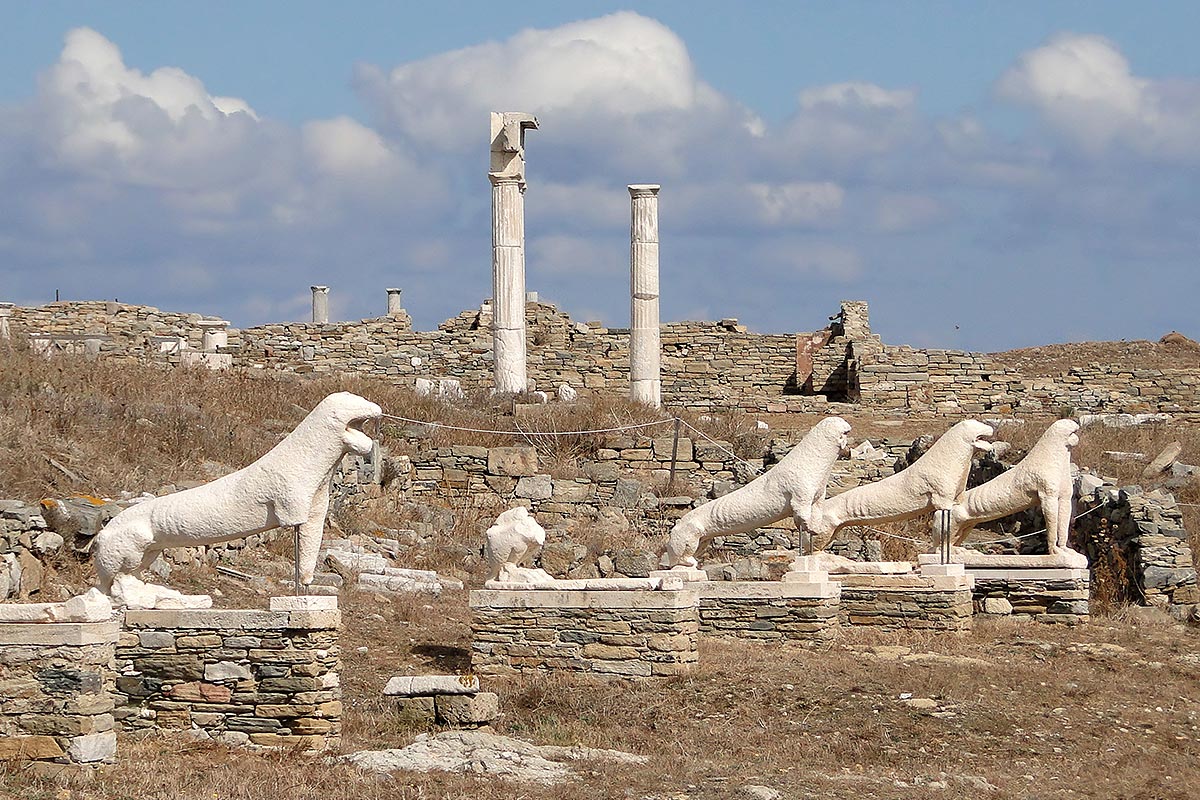
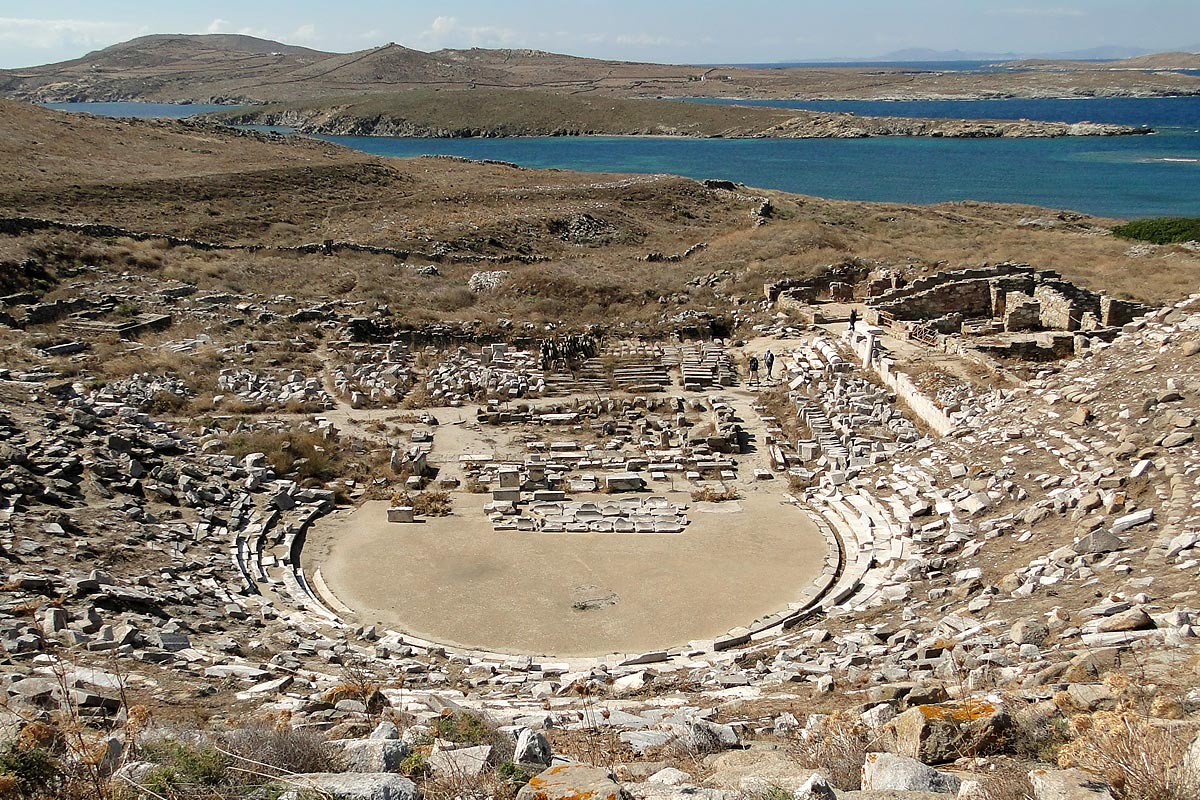
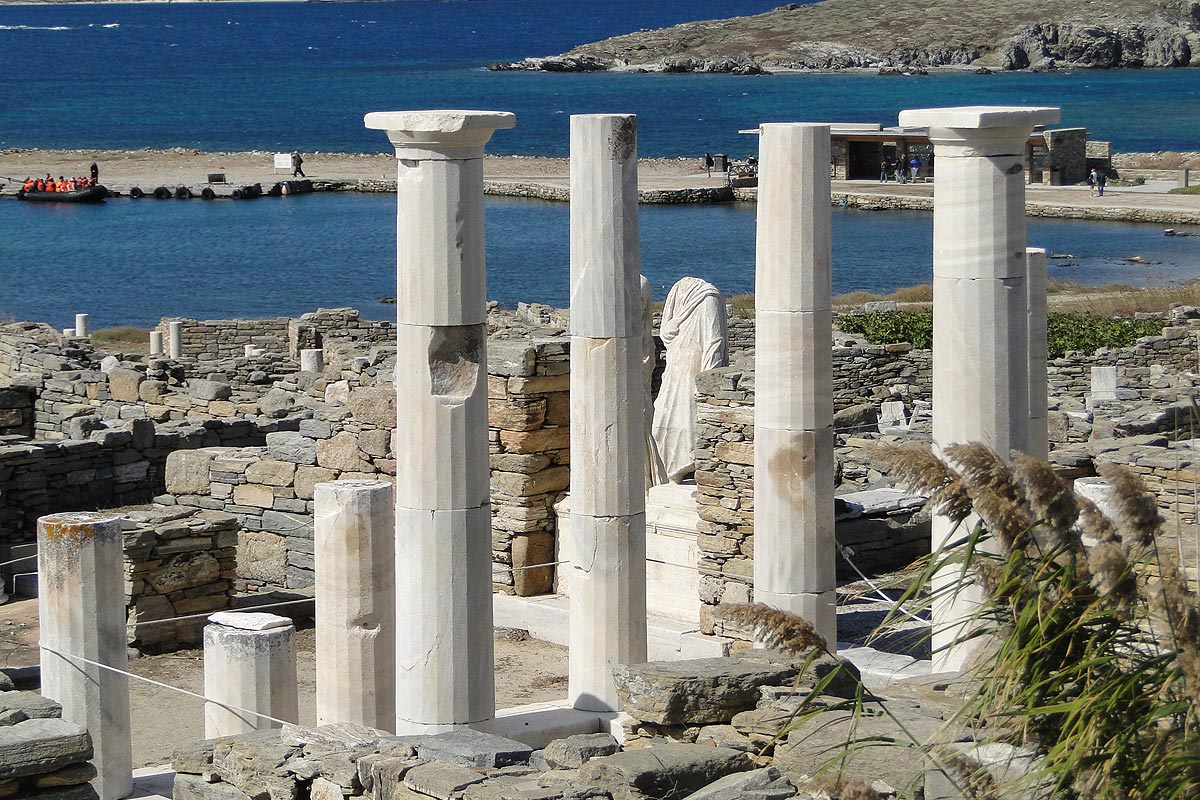
The island of Delos is the sacred island of the Ancient Greeks which, according to mythology, was revealed to Leto – pursued by Hera – from the waves of the Aegean, for her to give birth to Apollo and Artemis. On Delos, the ruins of one of the largest and most impressively organized settlements of Greco-Roman antiquity are preserved in fairly good condition.
The island was first inhabited in the 3rd millennium BC, possibly by the Carians. It then emerges in Greek history from the beginning of the 10th century BC, where it becomes an important worship center of the Ionian world, starting with the mythological birth of Apollo and Artemis, and later becomes the seat of a large amphictyony of Aegean islands. At the end of the 6th century BC, the Athenians tend to dominate the sacred island as well.
After centuries of inactivity, the French Archaeological School begins excavations at the archaeological site in 1873, and Delos emerges from obscurity, revealing its rich history to the entire world.
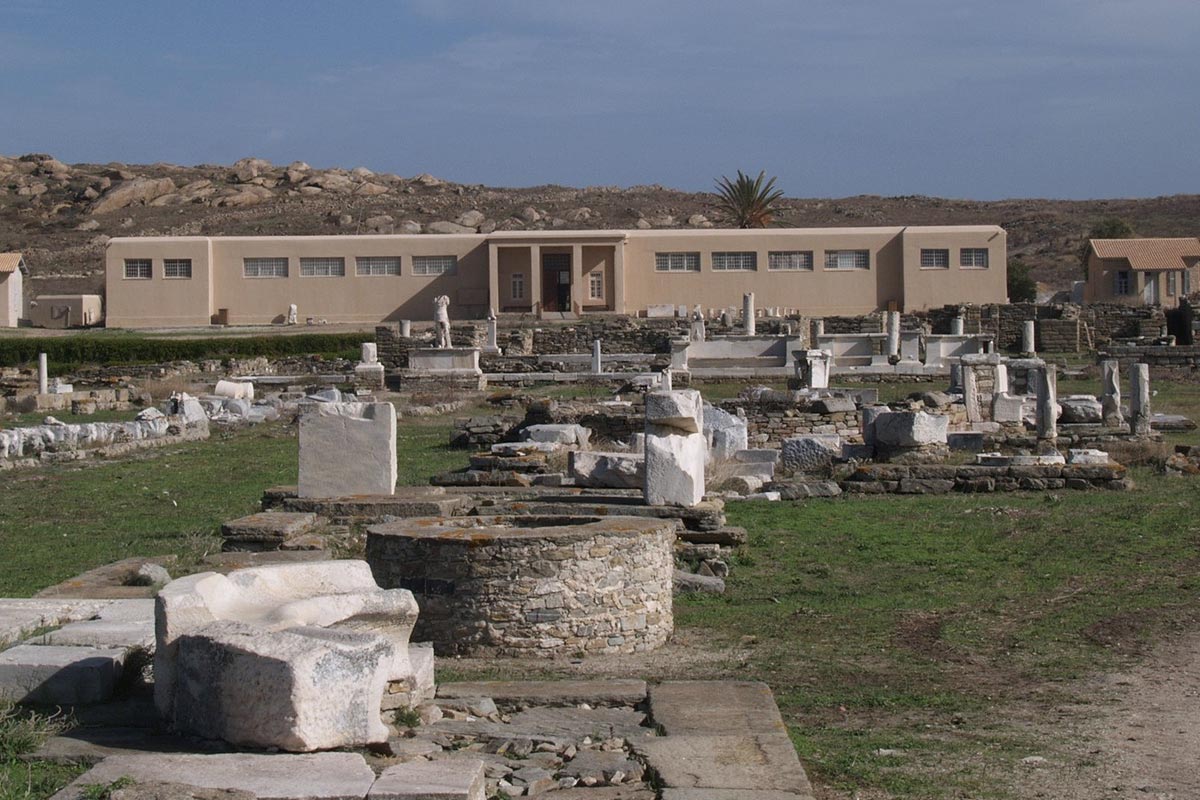
The Archaeological Museum of Delos is today one of the most important in Greece, with rare exhibits such as sculptures, vases, inscriptions, magnificent mosaics, and more.
Delos and Rhenia are under the protection of the Ministry of Culture, and the mooring of vessels and overnight stays of individuals without special permission are prohibited.
Archaeological Museum
The Museum of Delos was built in 1904, funded by the ‘Archaeological Society of Athens’. The original building included the five western rooms, to which several more were added in 1931, as well as in 1972.
During the same period, major but unfortunate changes were made to the exterior of the building (because archaeologists wanted to neutralize typical ‘industrial’ elements of the original building and make it more discreet, as it is prominently displayed among the antiquities).
The current exhibition of the Museum includes nine rooms: in six of these are displayed the sculptures and reliefs found in Delos, constituting one of the most important archaeological collections worldwide.
Two rooms contain vessels from prehistoric to late Hellenistic times, and another displays various small objects found in the private residences of Delos. This exhibition has not yet been completed.


How to Get There
There are daily trips to Delos, weather permitting (as access becomes impossible, especially during winter or summer with strong meltemi winds, not only for visitors but also for workers). In addition to the year-round routes from Mykonos, there are routes from other Cycladic islands (mainly from Paros and Naxos) only during the peak season.
Visitors should check weather conditions and schedules through the Port Authority using the following contact information.
Mykonos Port Authority
Address: Gialos
Phone Center: 22890 22218
Email: myko@mail.yen.gr
Mykonos Shipping Agencies
‘Delos travel’, M. Chatzioannou, Drafaki, Mykonos
Tel.: 22890 28603
‘Likouris Travel International’, Agiou Artemiou, Fabrika,
Tel.: 22890 24439
‘Sea Sky Travel’, Dimitris Manesis, Manto Square
Tel.: 22890 22853, 22890 23130, 22890 27799